The Best Parisian Cycling Routes Nobody Talks About
Routes You Might Not Know Yet
I’ll be honest with you: Parisian cycling routes are something of an obsession of mine. When I come to Paris for work — and I come often — I systematically set aside a few hours to explore. Not the main arteries signposted from every direction, not the Seine embankments heaving with tourists on electric scooters. No. I mean the routes you stumble across by chance, the ones a friend drops into conversation in passing, or that you spot on Strava while scrolling through other people’s tracks.
After years of criss-crossing Paris by bike — on a Vélib’, a hire bike, or my own battered green Bianchi — I’ve compiled my personal list. Five routes that deserve a place in your GPS. Five firm favourites I share with the same enthusiasm I’d bring to recommending a secret restaurant.
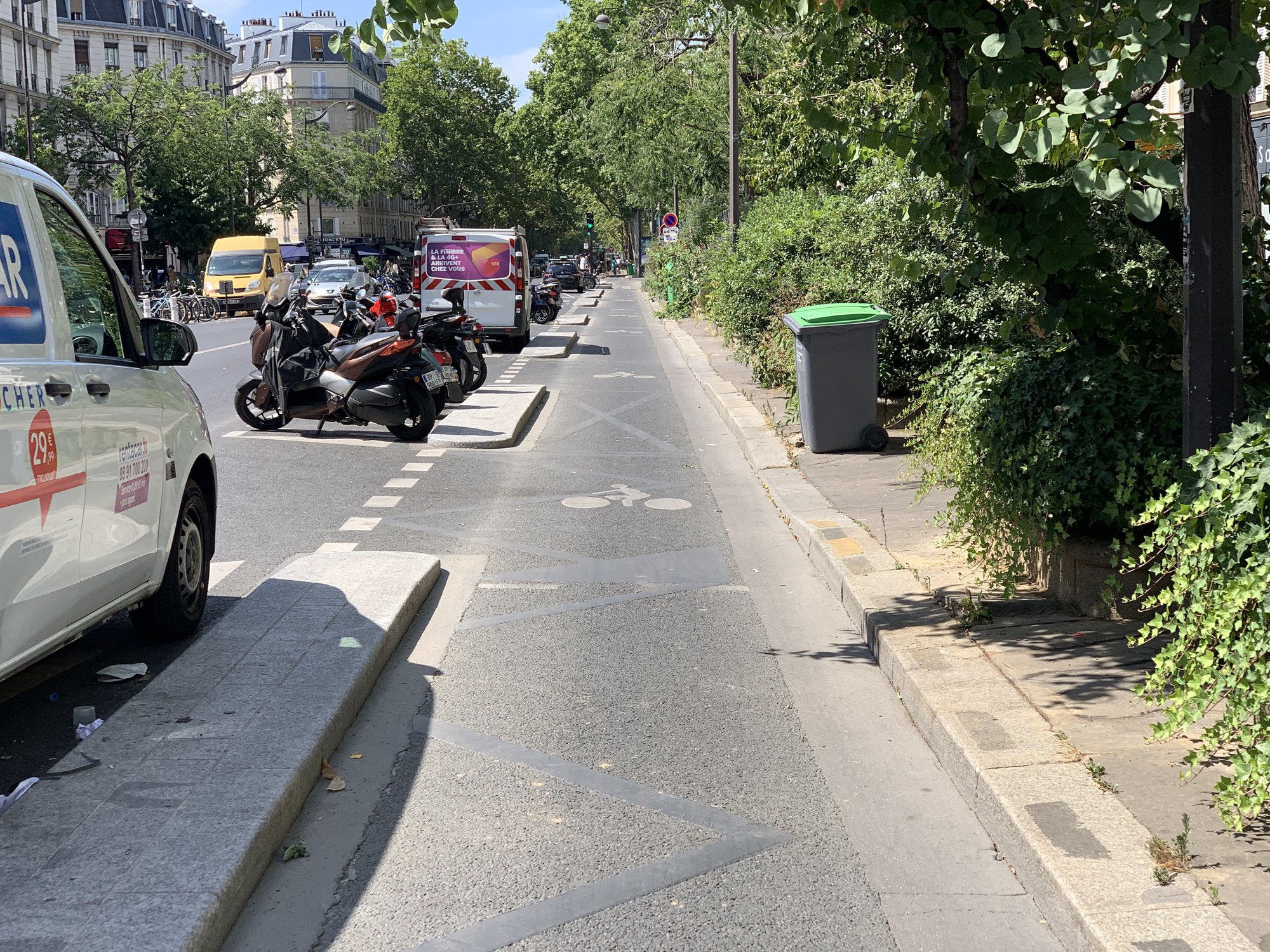
1. Boulevard Mortier (20th arrondissement): wide, empty, almost surreal
Boulevard Mortier runs alongside the old Paris fortifications, on the north-eastern edge of the 20th arrondissement. This is where the headquarters of the DGSE — France’s foreign intelligence service — are located, no less. Perhaps that’s why tourists give it a wide berth?
The cycle lane is wide, well-marked, and disconcertingly quiet. The surface is decent, and traffic is virtually nonexistent during working hours. You pedal along as if you’d forgotten you were in Paris. The plane trees filter the afternoon light in a way that feels almost cinematic. I always take it heading from the Porte des Lilas towards the Porte de Bagnolet — a short loop I weave in automatically whenever I hire a bike in the east of the city.
The stretch is brief (about 1.5 km), but the sense of escape is complete. If you’re looking to clear your head between two meetings, this is the place.
2. The Cardinet-Batignolles corridor: the charm of a slower pace
Batignolles is one of those Parisian neighbourhoods that still feels like a village. Rue Cardinet and its surroundings have benefited from a serious makeover as part of the Clichy-Batignolles regeneration project. The paving has been relaid, the cycle lanes redesigned, and the relationship between cyclists and pedestrians carefully thought through.
The route linking rue Cardinet with the Parc Clichy-Batignolles (Martin-Luther-King) offers a gentle experience, almost rural by the standards of the 17th arrondissement. Cars are actively discouraged; cyclists and pedestrians rule. The surface is recent and pleasant beneath the wheels.
I recommend pushing on as far as the Place du Docteur-Félix-Lobligeois, grabbing a coffee at one of the pavement cafés, and watching the neighbourhood go about its day. That’s Paris by bike when it works: arriving somewhere without quite having planned to.
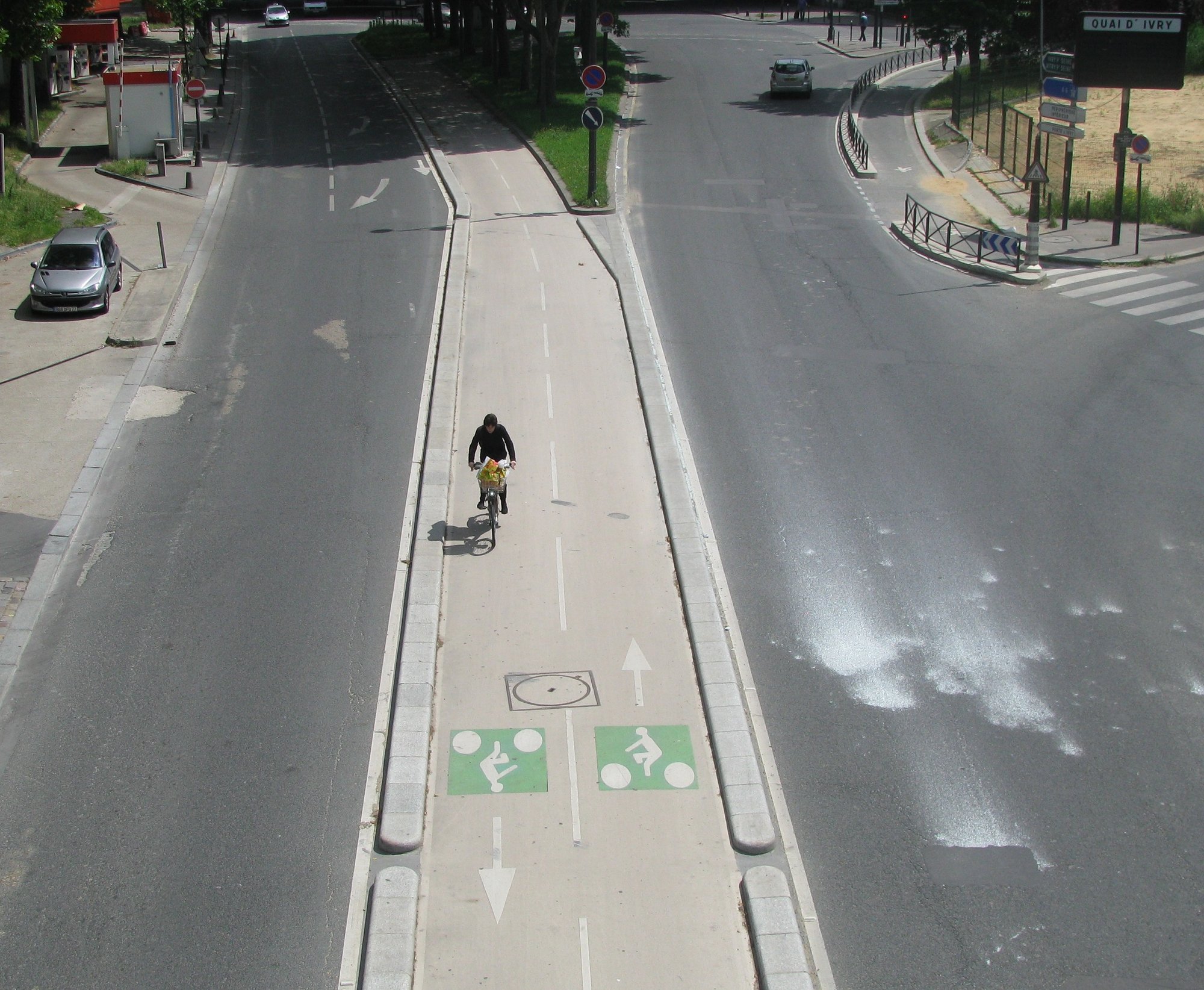
3. The Montrouge routes (14th/Montrouge): thoughtful urban planning on the periphery
You need to venture just beyond the Périphérique, near the Porte de Montrouge, to grasp something important: sometimes the inner suburbs do it better than Paris proper.
The cycle routes in Montrouge — a town bordering the 14th arrondissement — are wide, physically separated from motor traffic, and intelligently connected to the Paris network. The link with Avenue du Maine and Rue d’Alésia is well maintained. You can glide south from the Place Denfert-Rochereau with a fluidity that many Parisian routes would envy.
A detail worth noting: the surface is carefully maintained by the Montrouge municipality, which tends to respond more swiftly to repairs than some Parisian arrondissements. The result — you ride smoothly, quickly, without battling potholes at every turn.
For those staying in the 14th or looking to reach Montrouge without the usual hassle, this route really is worth trying at least once.
4. The Ménilmontant-Gambetta descent: pure pleasure
I’ll admit it — this one is a slightly selfish favourite. The descent down Rue de Ménilmontant towards the Place Gambetta, at the end of the day, when delivery riders have thinned out and the light falls beautifully across the stone façades — it’s one of the most exhilarating cycling experiences Paris has to offer.
The gradient is genuine (around 4–5% over a few hundred metres), the road is wide, and the cycle lane is clear enough to let you pick up speed without alarming pedestrians. The neighbourhood is lively, colourful, and authentically working-class. You pass grocers, artists’ workshops, bars where the crowd spills out onto the pavement.
A word of warning: going uphill is an entirely different story — it’s a serious climb, and not one I’d suggest to clients who aren’t particularly sporty. But on the way down? It’s perfect. Very nearly perfect.
A variation: heading back from Gambetta down Rue des Pyrénées, you can string together a very pleasant loop towards Charonne.
5. Rue de Charenton at night: a secret boulevard
I’ve saved the best until last — or rather, the most unexpected.
Rue de Charenton, in the 12th arrondissement, is what I’d call a “secret boulevard” — but only at night. During the day it’s a busy, commercial street, with a decent cycle lane but nothing exceptional. But after 10 p.m., everything changes.
Motor traffic evaporates. The cycle lane, which runs along a good stretch of the route from Nation to Bercy, becomes a kind of royal road for night cyclists. The traffic lights seem synchronised — or perhaps that’s just how it feels at that hour. Shops dim their signs, café terraces empty out, and all that remains is you, your bike, and the sound of the city winding down.
I discovered this route one evening when I was running late — a meeting that had dragged on, a reluctance to take the Métro. I was cycling alone down Rue de Charenton around 11 p.m. and experienced that rare sensation: the feeling of having Paris almost entirely to myself.
For those who keep late nights in the capital, tuck this one away for future reference.
In conclusion: the map is not the territory
None of these five routes appear in any official guide I’ve come across. They’re not promoted by the City of Paris in its communications campaigns. They exist because cyclists discovered them, tested them, fell in love with them, and passed the word along.
That’s the essence of real urban cycling culture: an oral tradition (or a digital one, via Strava and the forums) passed from one generation of cyclists to the next. The best routes aren’t always on the official maps. They live in the memories of those who cycle through Paris, week after week.
So if you have your own secret spots — drop them in the comments. I’m always glad to hear them.
— Marco B.