Filming from a Bike: Gear and Techniques for the Cyclist-Filmmaker
Two years ago, Zoé, 24, a film student at Paris 8 university, began attaching a small camera to her handlebars to film her rides from the 11th arrondissement to Vincennes. Today, her YouTube channel has 40,000 subscribers and her short Instagram clips regularly surpass a million views. Her secret? Not a colossal budget. Not a cutting-edge drone. Just an intimate knowledge of the right gear for cycling, and a genuine mastery of filming techniques while in motion.
I met her on the banks of the Canal Saint-Martin, camera in hand, and we talked for two hours. Here is what I took away — and what I wish I’d known when I first tried to film Léa and Milo on our cargo bike.
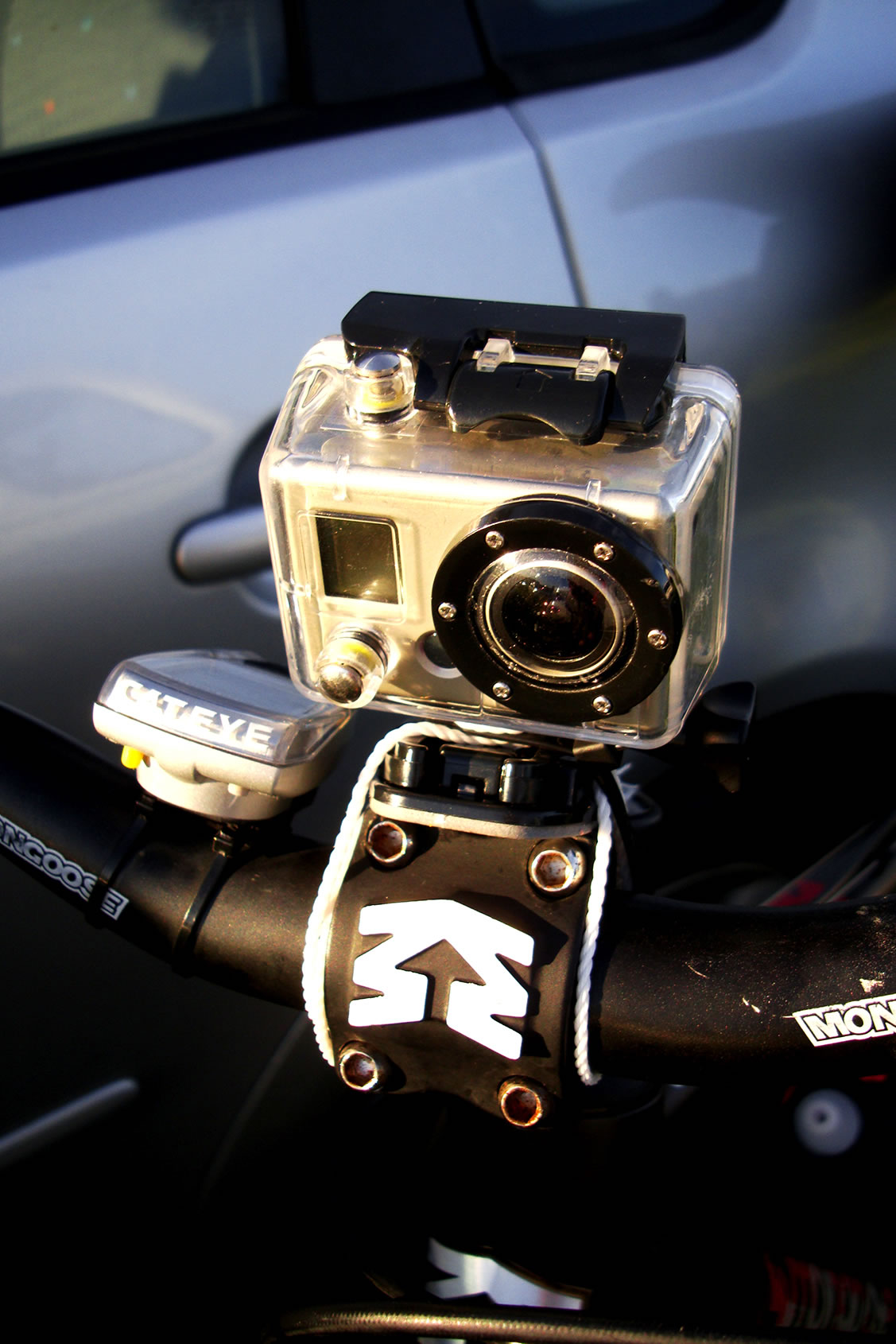
Cameras: Lightness Above All
GoPro, Insta360, Sony ZV: The Winning Trio
When filming from a bike, weight and compactness take priority over everything else. A DSLR, even the smallest one, quickly becomes a millstone — quite literally — when you’re riding over the cobblestones of the Marais.
The GoPro Hero 13 Black remains the benchmark. 153 grams, built-in HyperSmooth 6.0 stabilisation, and above all a vast ecosystem of accessories. Price: around €400 new. Zoé uses it for her POV shots in helmet mount.
The Insta360 X4 is the other serious option, especially if you want to shoot in 360 degrees and decide on the framing in post-production. Practical when you’re riding with children and can’t afford to look at the monitor. The camera records everything; you choose afterwards. Around €480.
The Sony ZV-E10 II is the choice for those who want superior image quality and don’t mind a bit more bulk. With a compact 16-50 mm lens, it fits in a handlebar bag. The autofocus is formidable for shots where you’re filming someone cycling in front of you. Around €800 with the lens.
Mounts: The Art of Absorbing Shock
Helmet, Handlebar, Frame: Three Very Different Approaches
A helmet mount produces the famous POV shot — you see what the cyclist sees. It’s immersive, but it moves in all directions the moment you turn your head. Zoé uses it sparingly, mainly for iconic moments: crossing the Pont des Arts, descending the slopes of Montmartre.
The handlebar mount is the most mechanically stable. The RAM Mount with a 25 mm ball lets you orient the camera at will. The problem: you often end up filming the tarmac and the handlebars, rarely the horizon. You need to tilt upwards, find the right angle. Budget €30–50 for a good mount.
Mounting on the seat tube or frame is under-used. It produces mid-height shots, less expected, that convey the city more effectively. That’s how Zoé filmed her most beautiful sequences beneath the elevated metro viaduct on line 6.
Vibrations — the real problem. A bike transmits every crack in the Parisian tarmac to the camera. Rigid mounts amplify this. The solution: vibration-dampening supports such as the Joby GorillaPod Bike Mount or the Tiltaing Hydra for GoPro, which incorporate silicone inserts. The difference is striking.
Post-Production Stabilisation: Miracles and Limits
When Software Saves the Day
The real game changer of the past five years is software stabilisation. DaVinci Resolve (free up to a very advanced professional level) includes a powerful stabiliser. Adobe Premiere Pro does too. And CapCut on a smartphone works miracles for a free tool.
But you need to understand the limits. Software stabilisation works by slightly reframing the image with each frame. It therefore consumes resolution. If you shoot in 4K and stabilise in post, you end up with usable 2.7K footage. Nothing dramatic, but worth knowing.
Most importantly, software stabilisation cannot correct brutal impacts — a kerb hit at 20 km/h, a pothole. It smooths out regular oscillations. For everything else, that’s the role of dampened mounts.
Zoé tells me she always shoots in 4K/60fps to give herself headroom. She cuts the really shaky passages, or edits them in time-lapse — which masks the vibrations while adding rhythm.
Filming Children on a Cargo Bike: Angle, Safety, Consent
This is a subject that touches me directly. When we go out with Léa and Milo on our Urban Arrow Douze, I want to capture memories. But filming your children in public is a question that deserves reflection.
The Technical Angle First
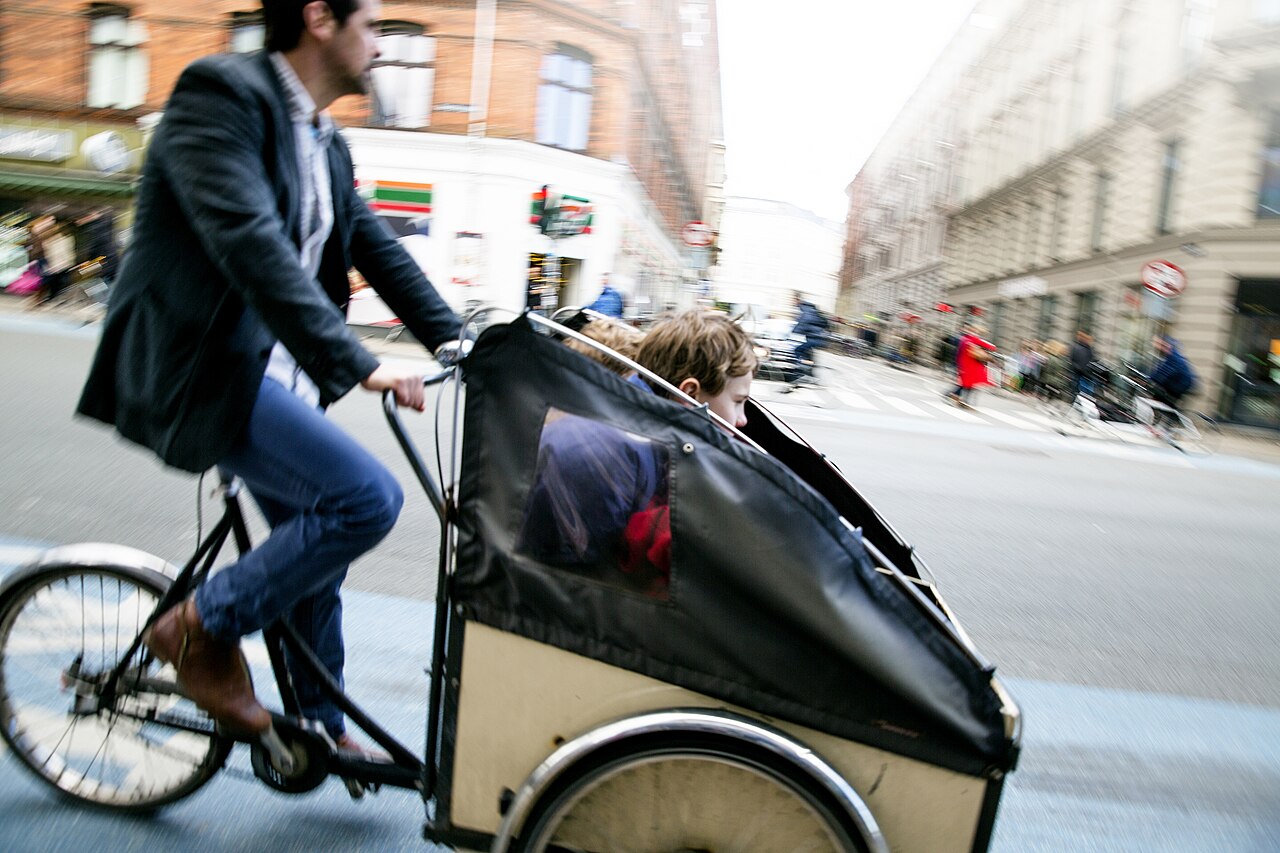
Children in a cargo box are often lower than the camera mounted on the handlebars. A frontal shot cuts off heads at mid-forehead — not ideal. The solution: a camera fixed on an articulated arm (such as a flexible Joby GorillaPod) positioned on the side at the children’s level. Or a GoPro inside the box, facing rearward — an original shot with a cocooning atmosphere.
Safety First
NEVER attach a camera to the children themselves during the journey. In a collision, this poses a risk of injury. Helmet cameras designed for adults are not suitable for small children, who have a different dynamic of movement. Film them from the bike, not from them.
Children’s Right to Privacy
In France, the image rights of minors are governed by Article 9 of the Civil Code and the law of 19 October 2020 on the protection of child influencers. If you publish videos of your own children, you hold parental authority. But if you film other people’s children — even in a public park, even from behind — things become more delicate. Zoé systematically blurs the faces of any children who appear in her frame. An ethical reflex that should be universal.
Short Edit vs Long Narrative: Two Different Grammars
Instagram and TikTok: Constraint as Creativity
For short formats — Instagram Reels, TikTok — the golden rule is simple: ten seconds to hook your audience, or you’re done. Zoé edits her Instagram clips on CapCut, directly on her phone. Music in sync, tight cuts, text overlays. All done in under an hour.
The danger of the short format: visual one-upmanship. You end up piling on effects to compensate for a lack of substance. Zoé has understood this: her best Reels are often the simplest — a static shot of the Seine at sunset, the sound of the city, a sentence in text. Less is more.
YouTube: Narrative That Takes Its Time
Her 10–15 minute YouTube videos take her six to eight hours of editing. The narrative structure changes everything: you need a beginning (context, the question posed), a middle (exploration, twists), an end (resolution, assessment). It’s documentary, not a compilation.
She uses DaVinci Resolve for longer edits. The colour grading tool is exceptional for giving visual coherence to footage shot in very different lighting conditions — Paris can shift from leaden grey to dazzling sunshine in ten minutes.
Image Rights in Public Spaces in Paris
A frequently misunderstood question. In France, filming in a public space is legal. You do not need authorisation to film the street, monuments, or traffic. What is regulated is the commercial exploitation of images — and the distribution of recognisable faces without consent.
For personal or non-commercial editorial use (blog, YouTube without direct monetisation), you are generally protected. As soon as you monetise — and the YouTube Partner Programme is a form of monetisation — the rules become more specific. Avoid close-up shots of identifiable individuals without their agreement. Systematically blurring faces is the recommended practice.
Certain Parisian locations have specific rules: the Louvre prohibits commercial filming without accreditation. The prefecture of police requires authorisation for filming “for commercial purposes” on public roads if you use professional-grade equipment. A cyclist with a GoPro on their helmet is rarely troubled, but it’s worth knowing.
The Sensible Starter Kit
Here is what I recommend for getting started without breaking the bank:
- GoPro Hero 12 Black (refurbished): €250–280
- RAM Mount handlebar mount: €35
- Official GoPro helmet mount: €15
- Spare battery + dual charger: €30
- CapCut (free) or DaVinci Resolve (free) for editing
Total: under €400. Zoé started with exactly this setup. Two years later, she added the Insta360 and a Bluetooth clip-on microphone for commentary on the go. But the foundation is still the same GoPro on the handlebars.
Next time I head into Paris with the children, I’m going to try the shot from inside the cargo box. Léa has already asked to hold the camera. At 8 years old, she frames better than I do — which says it all.
— Thomas J.