A Family Weekend by Cargo Bike: Paris to Auvers-sur-Oise
A Family Weekend by Cargo Bike: Paris to Auvers-sur-Oise
Some Friday evenings everything moves in the right direction. The cargo bike is loaded — two children, two panniers, a string shopping bag and a spare helmet wedged between the rails. We pedal gently away, Paris begins to dissolve behind us. We’re off to Auvers-sur-Oise, sixty kilometres ahead, in the golden light that Van Gogh spent his life chasing.
The Departure: The Montmartre Cycle Path from Paris Nord
We set off from the Gare du Nord on a Saturday morning, before the city is properly awake. The cargo bike — a Babboe City Mountain in our case, though any longtail or bakfiets will do — carried its load with quiet confidence. The cycle lane running alongside the Boulevard de la Chapelle as far as Barbès is narrow but manageable. We cut through Montmartre via the Rue Ordener towards the Rue du Ruisseau — a short but serious climb with a laden cargo: switch the motor to “turbo” mode if you have one, the children love the rocket-ship feeling.
From there, the Boulevard Périphérique is crossed via the cycle tunnel at the Porte de la Chapelle — a recent addition to the Parisian cycling network, inaugurated in 2023 as part of the Olympic infrastructure improvements. We emerge on the Saint-Denis side, and the plain opens out before us like a cinema screen.
The Canal de l’Ourcq: Pantin, Bobigny, Claye-Souilly
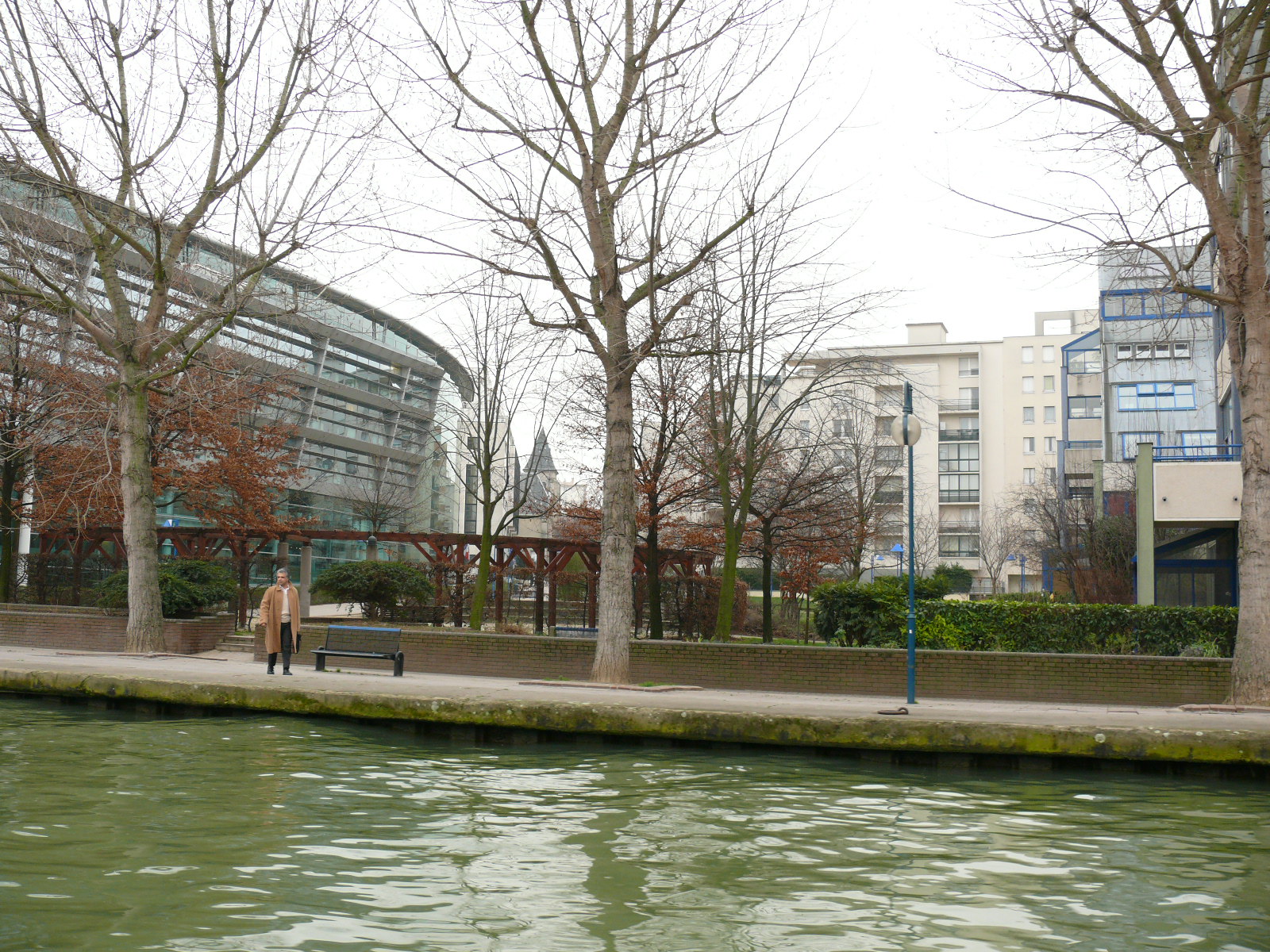
The real magic of this route is the Canal de l’Ourcq. We join it at Pantin, near the Philharmonie de Paris — if the children ask why that building looks like a spaceship, it was designed by Jean Nouvel, and the answer is: because it practically is one. The towpath is wide, flat, and shaded in summer by century-old plane trees. Perfect for a family cargo bike.
We follow the Bassin de la Villette, passing narrowboats and herons standing motionless as paintings. At Bobigny the canal narrows but the path remains passable. Around Sevran the atmosphere shifts: less urban, more verdant. The first wheat fields appear in the distance.
Claye-Souilly marks the end of the canal and the beginning of the plain. This is where we take our first proper break — a baker on the main square sells still-warm pains au chocolat at half past nine. The children climb out of the cargo like emerging from a cocoon, legs still drowsy.
Distance from Paris: approximately 25 km. Elevation gain: virtually nil.
Crossing the Plaine de France
The Plaine de France is a landscape Parisians rarely suspect exists. Hop fields, bright yellow rapeseed in spring, grain silos, quiet villages. The wind can blow here — with a loaded cargo bike, a headwind is a lesson in humility. Plan this section for mid-morning, before the heat builds.
The recommended route passes through Dammartin-en-Goële (sweeping views from the old town over the whole plain), then drops down towards Vémars and Survilliers. The roads are lightly trafficked, sometimes without a marked cycle lane, but traffic is sparse enough for children to be safe in the back of the cargo.
We then swing down towards the Oise valley. Mériel, L’Isle-Adam with its riverside guinguettes (traditional open-air dance cafés) and sandy beaches — yes, a real beach just 40 kilometres from Paris. If you’re running ahead of schedule, L’Isle-Adam is well worth a lunch stop by the river.
Arriving in Auvers: Van Gogh’s Village by Bike
Auvers-sur-Oise is a village that carries its ghosts with grace. Van Gogh spent the last seventy days of his life here, from May to July 1890. In that time he painted eighty canvases. Eighty paintings in seventy days — the figure makes your head spin.
We arrive from the lower end of the village, crossing the left bank of the Oise. The cargo bike navigates the cobbled lanes without difficulty, though we slow naturally as tourists photograph the famous Notre-Dame church (yes, the one from the painting — it looks exactly like that). The Maison du Dr Gachet and the Auberge Ravoux — where Van Gogh rented his room for 3.50 francs a month — are both reachable on foot or by bike from the main square.
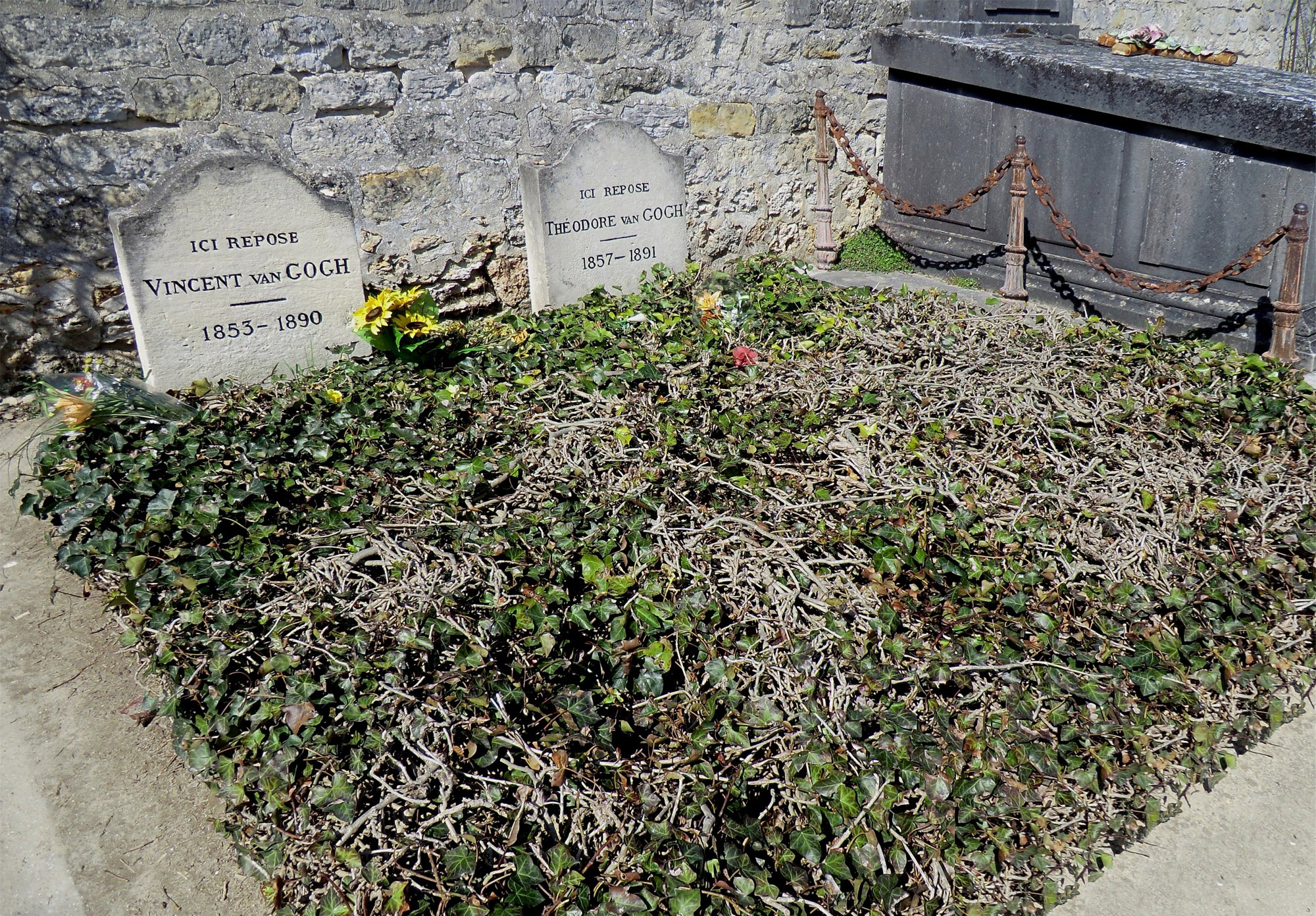
The Auberge Ravoux, now known as the Maison de Van Gogh, offers guided visits of the attic room. Small, spare, and quietly moving. Children aged seven and above instinctively grasp something solemn in this seven-square-metre space. The cemetery where Vincent and his brother Théo are buried is a ten-minute walk uphill, through the wheat fields of the eponymous painting.
Bike-Friendly Accommodation in Auvers
This is the critical logistical challenge of a cargo bike trip: finding accommodation that will accept a bike 1.90 m long and weighing 50 kg, and let you park it securely. A few tried-and-tested options:
- Le Moulin de la Galette d’Auvers (bed and breakfast): inner courtyard, space for cargo bikes, owners who are cyclists themselves. Call ahead to confirm parking availability.
- Les gîtes de la vallée de l’Oise (Gîtes de France accredited): several properties in and around Auvers have garages or gardens. Filter by the “bike space” criterion on the Gîtes de France website.
- Camping de l’Ile de Loisirs at Cergy-Pontoise (15 km away): the fallback option if Auvers is full — the campsite accepts cargo bikes and has spacious pitches.
Practical advice: always confirm by phone, never by message alone. State the dimensions of your cargo bike. Bring your own U-lock (a Kryptonite New York or equivalent) to secure the bike overnight.
The Return by Train: Cargo Bike and Children on the Transilien
The train journey back from Auvers-sur-Oise is the part that requires the most logistical preparation — and turns out to be far simpler than you’d expect.
Auvers-sur-Oise station is served by the Transilien H line (Paris-Nord → Pontoise → Saint-Ouen-l’Aumône, with a stop at Auvers). Trains run approximately hourly at weekends. Timetables on SNCF Connect.
Cargo bikes on the Transilien: Non-folded bicycles are permitted on Transilien trains, subject to available space in the designated cycle areas (marked by a bicycle pictogram on the carriage). A family cargo bike generally fits in these spaces if the train isn’t crowded. Avoid Sunday evening trains between 5 pm and 7 pm — aim to leave around 3 pm or wait until 7.30 pm.
Tickets: bicycles travel free on the Transilien (Île-de-France Mobilités). Only passengers pay for their journeys. With two children under eleven, the Carte Enfant+ offers significant discounts.
One detail that makes all the difference: board at the front or rear of the train, where the cycle spaces tend to be less congested. And let the guard know when you board — Transilien staff are generally cooperative when you explain the situation.
What to Pack, What to Leave Behind
For two days with two children in a cargo bike:
- Side panniers (20L each side): clothing, first-aid kit, chargers
- A 1.5L water bottle per person (refilling along the way isn’t always straightforward)
- Dry snacks for the Plaine de France section (villages are sparse)
- Minimal repair kit: cargo inner tube (mind the specific size), tyre levers, pump
- Helmets for everyone — including the little one’s colourful helmet that she refuses to take off even at the table
Leave at home: the guilt about having set off on Friday evening. The phone you check every ten minutes. The idea that a car-free weekend is somehow complicated.
Fade to Black
We head home on a Sunday evening, the children asleep in the cargo like in an oversized cradle. The July light lingers long and orange — exactly the light Van Gogh spent his life trying to capture. The train back to Paris leaves in twenty minutes.
Auvers is sixty kilometres from Paris and seventy years back in time. By cargo bike, it’s a day of pedalling, a night in a quiet village, and the return journey by rail with legs that know something new.
Total distance: approximately 60 km. Cumulative elevation gain: 350 m (very gradual). Profile: accessible on an electric cargo bike. On a non-electric cargo: allow a day and a half for the outward leg.
— Zoé M.