Our First Cargo Bike Ride with the Kids: What We Wish We'd Known
I still remember that Saturday morning in March. My brother and his wife had borrowed an electric cargo bike for the first time with their two little ones — Emma, 4, and Théo, 2. I was there, curious, taking photos from the pavement. What was meant to be a pleasant outing turned into… well, let’s call it a formative experience. Here’s everything we wished we’d known beforehand.
Safety Equipment: No Compromises
Before you even think about pedalling, there’s one essential question: how do you keep children safe in an open box travelling at 20–25 km/h through Paris? This isn’t rhetorical.
The Helmet, Obviously
For children under 12, helmets have been compulsory since 2017 in France. But there’s a world of difference between a legal requirement and finding the right helmet for a 2-year-old’s head. Standard cycling helmets often don’t sit well on babies’ small, round heads. Specialists recommend helmets with a well-fitted chin strap and a head circumference between 44 and 50 cm for toddlers.
Emma had a great Nutcase helmet (an American brand well known for its children’s designs) fitted perfectly. Théo, on the other hand, had an old helmet that was slightly too big and kept tilting to one side. First lesson: try the helmet before the big day — not in the rental shop car park.
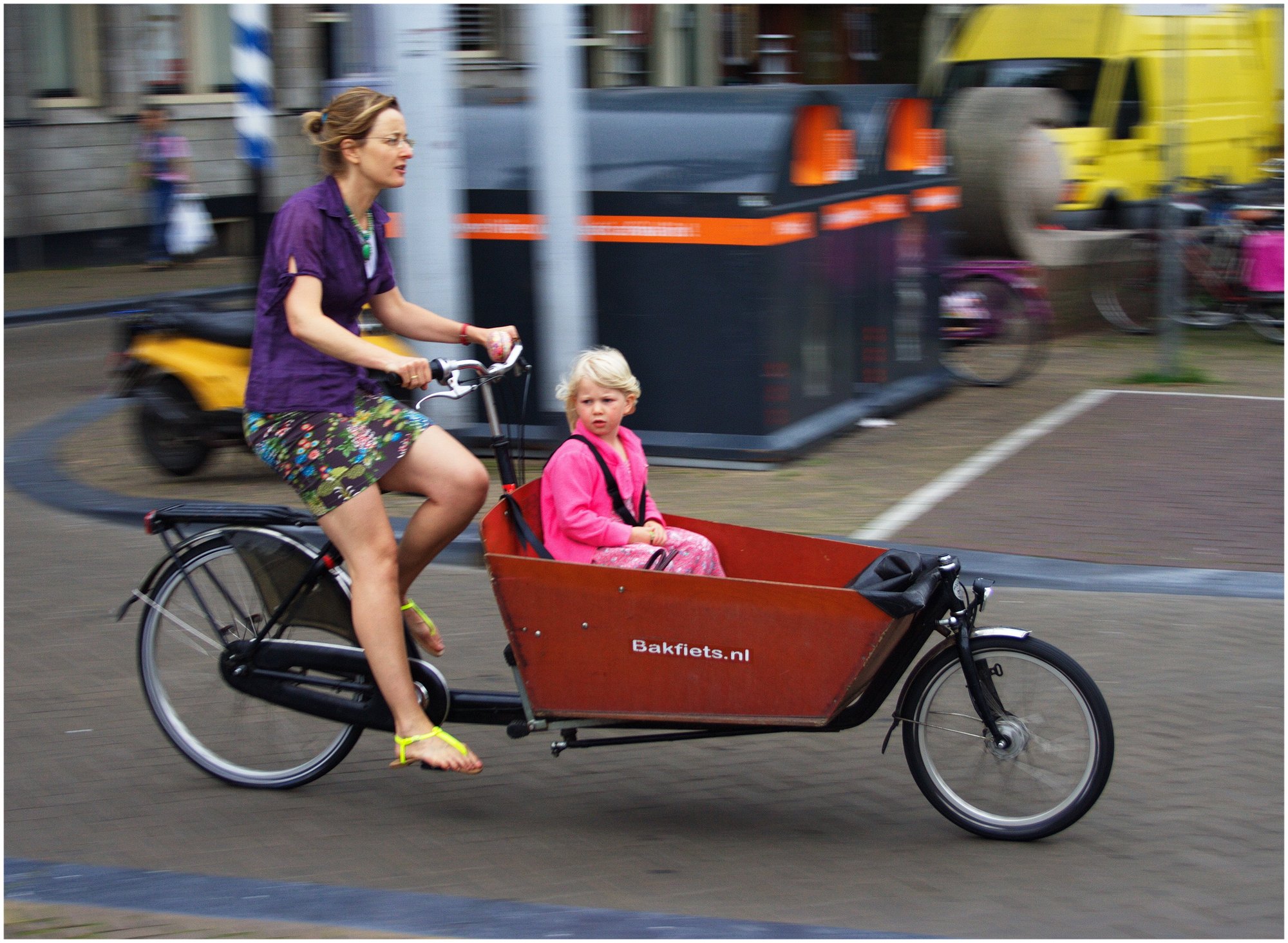
The Cargo Bike Harnesses
Most rental cargo bikes in Paris — whether from Vélo Cargo Paris or other providers — come fitted with 3- or 5-point harnesses in the box. Make sure they’re properly adjusted for your child’s size. Théo was literally floating in his. The rental assistant spent 5 minutes adjusting them correctly. Those 5 minutes were worth their weight in gold.
The First Ride: Stay Close to Home
This is THE piece of advice you’ll find everywhere — and that nobody really listens to. My brother lives in Montmartre. He had planned… the Bois de Vincennes for the first ride. That’s 12 kilometres across Paris.
We convinced him to do a loop around the neighbourhood instead. And it was so much better.
Why Stay Close?
Firstly, for yourself. Steering a cargo bike loaded with 25–30 kg of children and kit is not something you can wing. The balance is different — more stable when stationary than a regular bike, but corners require a particular technique. The first 500 metres, you’re finding your feet.
Then, for the children. Even if they love the idea, their concentration has its limits. Emma started wriggling after 20 minutes. “I need a wee” — naturally, on a street with no café in sight. Staying close to home means you always have an exit.
Ideal first ride: 3–5 km maximum, on cycle paths, with a clear destination (a bakery, a park). The goal is to come home wanting to do it again.
Rain: The Real Character Test
Paris gets around 650 mm of rain a year. If you want the cargo bike to become your main family transport, you need to make peace with the rain. Not avoid it — make peace with it.
Rain Protection for the Box
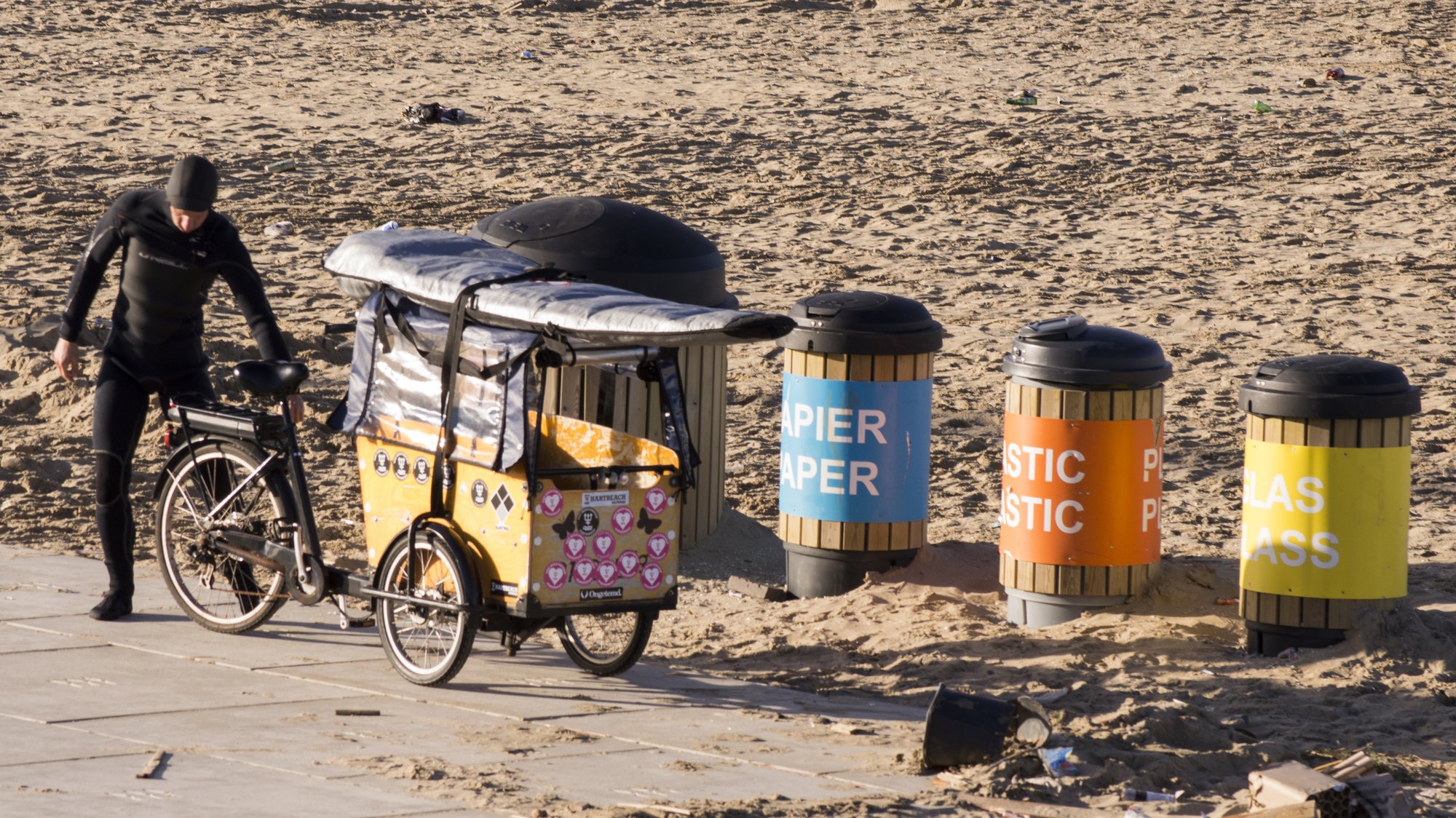
Most rental cargo bikes come with protective covers (also called “rain hoods” or “cargo covers”). It’s a bit like a pram hood: it covers the box and protects the children from rain and wind. Emma called it “the cave”. Théo fell asleep underneath it within two minutes.
Bear in mind: with the cover closed, children see less and may feel isolated. Some love it (the cosy cocoon effect), others panic. Test it on a dry day first.
For the adult pedalling: a good waterproof jacket and overshoes. No playing the hero without the right kit.
Visibility
In the rain, visibility is reduced for everyone. Cars see you less easily, and you can’t see as far ahead. Cargo bikes are wide (up to 90–100 cm on some models) — on narrow, wet streets, it can get quite tricky. In wet weather, avoid streets without cycle lanes and slow down.
The Children’s Reactions: The Real Show
What were we honestly expecting? That the children would behave like small, reasonable adults?
The Initial Fear
Théo cried for exactly 45 seconds at the start. Then he spotted a pigeon and forgot everything. This initial fear phase is perfectly normal — the sound of the electric motor (even a quiet one), the movement, the sensation of being elevated. The trick: let a child sit on the other adult’s lap for the first metre, then settle them into the box once they’re reassured. (Ideal, of course, when there are two adults.)
The Uncontrollable Enthusiasm
After Théo’s 45 seconds, Emma declared it was “better than a rollercoaster”. She started waving at everyone on the pavements like a princess in a parade. This phase is charming but requires attention: a child fidgeting in the box shifts the centre of gravity.
Getting Used to It, Quickly
By the third ride (the following week, they’d rented again), the children climbed into the box as naturally as boarding a bus. No fuss whatsoever. What had been an extraordinary adventure had become a normal mode of transport. That’s exactly what you’re aiming for.
Making the Cargo Bike the Default Option
That’s the real question. Not “shall we try a cargo bike one Saturday” but “are we genuinely going to change our daily travel habits?”
What Helps
Regularity creates habit. If you take the cargo bike once a month, it’s a special activity. If you take it to pick the children up from school on Tuesdays and Thursdays, it becomes their normal way of getting around. Children adapt far better than adults — they’ll end up being the ones asking, “Are we taking the bike?”
The practical side helps too. Doing the shopping without hunting for a parking space. Arriving at school without the stress of traffic. These small daily wins transform your relationship with cycling.
The Real Obstacles
Let’s be honest: not everyone can afford to buy a cargo bike (anywhere from £2,500 to £7,000 depending on the model). Renting is an excellent alternative for testing the concept over time. Several Paris providers offer monthly subscriptions.
There’s also the question of storage at home. A cargo bike is 1.80 to 2.20 m long and 80–100 cm wide. In a classic Haussmann Parisian flat, that’s an existential question.
What the Children Taught Us
We often talk about what adults teach children about cycling. But it works the other way round too.
Emma, with her 4-year-old’s perspective from the cargo box, has a view of the city that adults have lost. She spots pigeons, forgotten balloons on rooftops, cats in windows. She asks questions: “Why is that house so old?” “What’s that green thing on the bridge?” (The Coulée Verte, Emma. That’s the Coulée Verte — a former railway line turned into an elevated garden, running through the 12th arrondissement.)
Cycling with children means slowing down. Not just physically, but mentally. You can’t be in “rushing to the office” mode when two children are providing a running commentary on every lamp post from your cargo box. And that slowness, strangely enough, does you good.
Théo, for his part, introduced the singing rule on hills. Every incline, however small, calls for an improvised song. The adults adopted the rule.
In Summary: What We Wish We’d Known
- Try the helmet at home before the day of the first ride.
- Plan a first ride of 3–5 km maximum, with a clear destination.
- Ask the rental shop to adjust the harnesses to fit your children exactly.
- Test the rain cover in dry weather first — some children don’t like it.
- Don’t rush the pace — if the child wants to go home, you go home. Next time will be better.
- The initial fear usually lasts less than 2 minutes — wait before giving up.
Cargo cycling with children is a small revolution in daily life. Imperfect, sometimes a struggle, often magical. And the children, in their great wisdom at 2 and 4 years old, couldn’t care less about the struggle — they remember the magic.
— Clara M.