Spring Light: Cycling Paris at Golden Hour
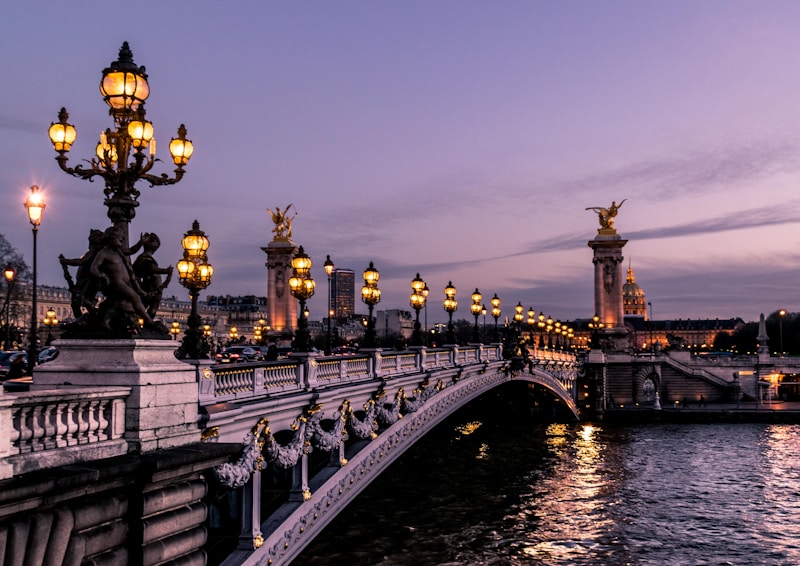
Some mornings, Paris rewards you. The light falls at an angle that turns every bridge into a painting, every embankment into an invitation. Those mornings arrive in spring, between late March and late May, when the sun rises early but not too early, when the trees are budding but the tourists haven’t yet woken up. Those mornings, the best seat in the city is on a bicycle.
As a PE teacher, I’ve learnt to read light the way I read a training calendar. The golden hour — that window of low, raking light just after sunrise or before sunset — is no mystery: it’s physics. But in Paris, it takes on an added dimension, because the city was made for it.
Here are five themed rides to capture these moments before the city stirs.
Ride 1: Sunrise on the Seine (5:30am – 7am)
The sun rises over Paris around 6:20am in late March, 6:45am in early April, and 6am in May. The light is golden for 30 to 45 minutes after sunrise, with an orange-pink hue that rakes across the bridges on the Left Bank.
The route: start from Pont de Bir-Hakeim heading east. The Pont de Bir-Hakeim may be Paris’s most photographed bridge for good reason: its two-level structure, steel arches and the Eiffel Tower in the background create a natural frame. At this hour, it’s deserted.
Ride gently along the Voie Georges Pompidou, the riverside cycle path on the Right Bank. The bouquinistes are closed, the terraces empty, the barges asleep. The Pont Neuf — Paris’s oldest bridge, completed in 1607 — reflects gold in the water with a precision that surpasses any Instagram filter.
Finish at the Jardin des Tuileries via the Rivoli entrance — the garden opens at 7am in spring. A few joggers, the first bees among the flowerbeds, and a light that softens in under ten minutes: if you have a camera, this is where everything happens.
Technical tip: to film from your bike, drop your speed to 10–12 km/h and mount your phone on a handlebar holder (Quad Lock or similar) with stabilisation activated. Long slow-tracking shots are more cinematic than static footage.
Ride 2: The Morning Market at Aligre (7am – 9am)
The Marché d’Aligre, on Place d’Aligre in the 12th arrondissement, is one of Paris’s oldest and most vibrant markets. It opens at 7:30am on weekdays. At this hour, the spring light filters through from rue de Citeaux and falls on the stalls with a warmth that makes you want to photograph everything: pyramids of oranges, fishmongers in wellies, neighbourhood regulars.
The route: from Boulevard Diderot, head towards the Bastille via the southern stretch of the Canal Saint-Martin. The Passerelle Grange-aux-Belles offers a bird’s-eye view over the canal, with light reflections that shift with the breeze on the water.
The combination of market and canal is ideal for a visual narrative: action, blurred movement portraits, textures, changing light.
Photography tip: don’t chase the perfect shot. Chase the moment. The market gardener arranging his tomatoes, the customer hesitating between two leeks. The 8am light is less dramatic than 6am, but it’s softer and more human.
Ride 3: Golden Hour in Montmartre (6:30pm – 8pm)
The evening is the other magical window. In April in Paris, sunset falls around 8:30pm (summer time). Golden hour therefore begins around 7:15–8pm, casting long, warm, low light that rakes across the limestone façades of the Butte.
The route: climb to Montmartre via rue Lepic (the winding uphill street — it’s the only serious physical effort of the ride). At the top, you have two options: the terrace in front of Sacré-Cœur (panoramic view over Paris, photogenic but touristy) or rue Norvins and its backstreets behind (less photographed, more intimate light on the cobblestones).
Ride towards the Moulin de la Galette (at the top of rue Lepic, on the left): it’s one of only two windmills still standing in Paris. On a spring late afternoon, the golden light falls on its white sails from the west with remarkable intensity.
Descend via rue des Abbesses and the steps of rue Tholozé (leave your bike — it’s a gentle walk). The neighbourhood is still breathing: the bars haven’t opened yet, the alleyways are yours.
Fitness tip: for those less accustomed to the climb, the Butte can be tackled on a hire electric bike (Vélib’ V2 electric bikes available at the Nation station). The ascent then takes under 10 minutes from the bottom of rue des Abbesses.
Ride 4: The Marais at Apéritif Hour (7pm – 8:30pm)
The Marais in spring is the very definition of urban golden hour. The Place des Vosges — built in 1612 under Henri IV and surrounded by its red-brick arcades — is closed to traffic. At sunset, light enters at 45 degrees through the southern arcades and projects golden diamonds across the cobblestones and fountains.
The route: from Boulevard Beaumarchais, enter the Marais via rue de la Roquette. Ride calmly — the Marais is a low-traffic zone — towards rue de Bretagne and the Marché des Enfants Rouges (Paris’s oldest covered market, open since 1615). Continue to Place des Vosges via rue de Turenne.
Take 20 minutes to observe (and photograph if you wish) the light shifting across the façades. In April and May, the magic happens between 7:30pm and 8pm.
Finish with a detour to the Canal Saint-Martin (20–25 minutes by bike heading north): the barges, cast-iron swing bridges and plane trees beginning to turn green form a cinematic backdrop at this hour.
Ride 5: A Calendar of Spring Light Across Paris
To optimise your rides, here are the approximate sun angles for Paris in April:
- Sunrise: 6:30–6:45am (late March 6:20am, early May 6:05am)
- Morning golden hour: 6:30am to 7:15am (35–45 minutes)
- Sunset: 8:15–8:30pm (late March 7:45pm, late May 9:30pm)
- Evening golden hour: 7:15pm to 8:30pm (evenings are often longer and warmer in tone)
By arrondissement: - 1st–4th (Seine and Marais): best light in the morning (east-facing façades) - 18th (Montmartre): best light in the late afternoon (west-facing side of the Butte) - 7th (Eiffel Tower): spectacular morning light on the Champ-de-Mars - 12th (Bercy, Vincennes): evening light on the allées de Bercy
Filming from the Bike: The Technical Rules
Stabilisation first. A handlebar mount without a stabiliser will produce unusable footage on cobblestones. Opt for a mechanical stabiliser (Moment Case + Moment mount) or a recent smartphone in cinematic mode (iPhone 16, Google Pixel 9 — both have effective corrective stabilisation).
Rolling speed. For footage filmed from a moving bike: - 8–12 km/h: cinematic tracking shot - 15–20 km/h: dynamic shot (sense of exploration) - Over 20 km/h: excessive blur even with stabilisation
Recommended settings: manual mode, exposure -0.5 to -1 stop from the automatic reading (avoids blown highlights), white balance set to ‘cloudy’ to warm the tones even in clear skies.
For still photography: get off your bike. One second’s pause is enough. The most beautiful shot isn’t taken in motion — it’s taken when you feel something and stop to capture it.
Conclusion: Paris Is Worth Getting Up Early For
Paris’s spring light is a fleeting gift. It lasts six to eight weeks, arrives without warning and disappears with summer. These cycling rides — alone, as a couple, in a small group — are among the most free and most intense Parisian experiences you can have.
No app will tell you better than your own gaze, resting on an empty bridge at 6:45am, what Paris can offer. Get on a bike. Leave before the city wakes. Let the light guide you.
Sources: Sunrise/Sunset Paris — timeanddate.com, Mairie de Paris — Parks and gardens opening hours
— Marco B.