Helmet, Lock, Lights: Essential Cycling Equipment in Paris (and What's Actually Worth Buying Too)
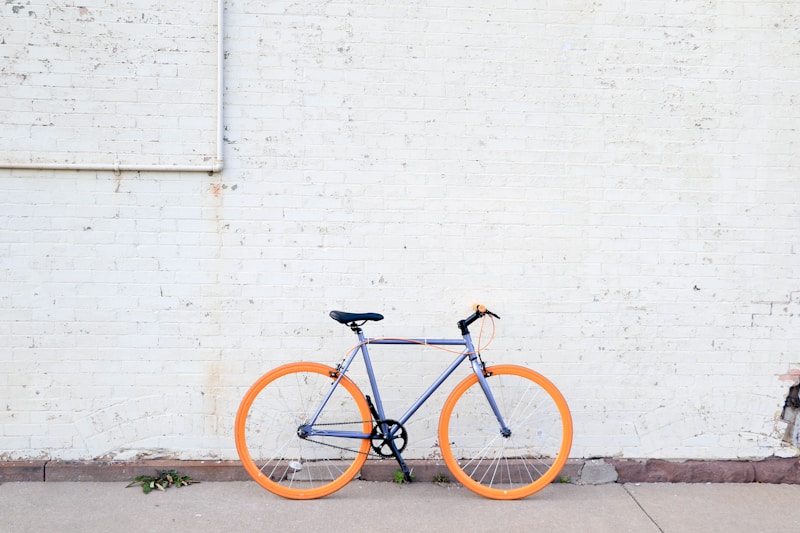
I’m often asked this question at the start of the season: “Sophie, what do I actually need on my bike in Paris?” There are two possible answers: the legal answer, and the practical one. They don’t fully overlap. Here is the honest guide I wish I’d had when I first started cycling regularly in Paris.
What the Law Says in 2025
The Helmet: Compulsory Only for Under-12s
Contrary to what you often hear, a helmet is not compulsory for adults in France. That’s the law. The Highway Code (Article R431-1) makes wearing an approved helmet compulsory only for children under 12 who are passengers or riders on a bicycle.
For adults: strongly recommended, but not legally required. In my experience as a PE teacher, I never get on a bike without a helmet — the physics of a fall at 20 km/h on tarmac leaves no room for debate. But the law doesn’t compel you.
Important note: the helmet must carry CE certification (EN 1078 marking for bicycles). Ski or motorcycle helmets are not compliant for cycling use. A decent urban helmet costs between €40 and €120.
Lights: Compulsory at Night, Full Stop
No ambiguity here. The Highway Code (Article R313-1) requires all bicycles to have:
- A white or yellow front light, visible at 150 metres
- A red rear light, visible at 150 metres
- A red rear reflector (often integrated into the wheel or pedals)
- Reflectors on the pedals (compulsory on new bicycles since 2016)
These lights are compulsory at night and in poor visibility conditions (fog, rain, tunnels). In Paris, on a city bike in winter, that means the vast majority of journeys after 5pm.
Penalty for non-compliance: an €11 fine (Class 1 offence). Light, but the real penalty is the risk of being invisible in traffic.
The regulatory detail that surprises people: flashing lights are legal at both front and rear, provided their intensity is sufficient. In practice, a rear light producing 30+ lumens in flashing mode is more visible than a weak fixed light.
The Lock: No Legal Requirement
No law obliges you to lock your bicycle. That’s entirely your affair. But statistically, in Paris, a bike left unlocked in the street is a bike stolen within an average of 48 hours in central neighbourhoods.
Insurance note: most bicycle insurance policies (or home insurance extensions) require a certified lock to reimburse theft. Check your policy before investing in a lock — some insurers require a minimum certification level (Sold Secure, ART, or FUB ratings).
The Bell: Compulsory
Article R431-1 of the Highway Code: every bicycle must be fitted with an audible warning device (a bell). Fine: €11. Often forgotten, rarely enforced, but it is the law.
Underrated Equipment That Makes a Real Difference
The law is the baseline. What follows is hard-won practical experience from someone who has cycled regularly in Paris for years.
Mudguards: Essential for Commuters
Paris averages 150 rainy days per year. Without front and rear mudguards, rain turns your back into a road surface and your shoes into sponges. Mudguards aren’t glamorous. But they’re essential for anyone who cycles more than twice a week.
Good-quality mudguards (SKS, Crud, Portland Design Works) fit in under 10 minutes on most city bikes. Budget: €20 to €50.
The Mirror: Underestimated But Decisive
As a PE teacher, I emphasise spatial awareness as a fundamental skill. On a city bike, learning to look behind without throwing off your trajectory is a technique that takes practice. A handlebar or helmet mirror skips the learning curve and immediately improves your safety.
Handlebar mirrors (Hafny, Busch & Müller) cost between €15 and €35. Helmet-mounted models are less stable but more discreet.
A Quality Bell: Seriously
I know, it sounds amusing. But a cheap bell with a tinny ring that no one can hear at 50 centimetres is useless on a Parisian boulevard. Incredibell, Knog Oi, or Copenhagen Bells have a full, deep sound audible at 5–8 metres. In Paris, where pedestrians tend to step onto cycle paths without looking, this makes a real difference.
Budget: €10 to €30.
Daytime Running Lights
The trend in cycling safety in 2025 is towards high-intensity daytime lights. Countries like Sweden, Denmark and the Netherlands have been using daytime cycling lights for years. Studies have shown a 19% reduction in collisions with motor vehicles when using a flashing front light even in broad daylight (source: Danish study, 2004).
A Garmin Varia front light, a Lezyne Hecto, or an Exposure Lights Sirius all offer effective daytime pulse modes. Budget: €30 to €80.
Equipment Budget by Profile
Profile 1: The Weekend Cyclist (occasional use, leisure rides)
This rider goes out once or twice a week, mainly during the day, in reasonable conditions.
| Equipment | Estimated cost |
|---|---|
| Entry-level approved helmet | €40–60 |
| USB rechargeable front and rear lights | €25–40 |
| Mid-range U-lock | €40–60 |
| Bell | €10–15 |
| Total | €115–175 |
Profile 2: The Daily Commuter (home-to-work, all conditions)
This rider depends on their bike to get to work every day, in all weathers, sometimes at night.
| Equipment | Estimated cost |
|---|---|
| Mid-range helmet with visor | €70–120 |
| Powerful lights with daytime mode | €60–100 |
| High-end U-lock + secondary cable | €80–130 |
| Front and rear mudguards | €25–45 |
| Handlebar mirror | €20–30 |
| Quality bell | €20–30 |
| Total | €275–455 |
Profile 3: The Cargo Parent (cargo bike with children)
This rider transports children and equipment around Paris, with maximum safety requirements.
| Equipment | Estimated cost |
|---|---|
| High-end adult helmet | €100–200 |
| Children’s helmets (x1 or x2) | €30–60 per child |
| Cargo-specific lighting (powerful front + side lights) | €100–150 |
| Long-chain lock for cargo bike | €80–150 |
| Mudguards (often integrated on cargo bikes) | €0–30 |
| Cargo rear convex mirror | €15–30 |
| Total | €325–620 (excluding the cargo bike itself) |
Conclusion: Invest Wisely, Invest Well
Cycling equipment is not a luxury: it is safety negotiated with the laws of physics. What is legally required represents a minimal investment. What is genuinely useful, according to your profile and usage, can transform your daily cycling experience in Paris.
My personal rule: never compromise on the helmet and lights. On everything else, adapt to your reality. Paris rewards well-equipped cyclists and penalises the careless.
Sources: Légifrance — Highway Code, R431-1, FUB — Cycling equipment guide, Road Safety France
— Sophie K.